
Why every organisation needs a project management survival strategy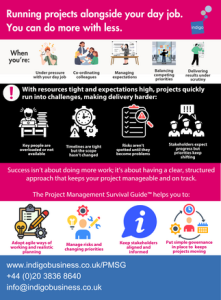
Uncertainty isn’t new. What is dangerous is being unprepared for it.
Across industries, organisations are facing rising costs, stretched teams, shifting priorities and tougher stakeholder expectations. In this environment, even strong projects can stumble. Not because they lack value. Not because the strategy is wrong. But because they weren’t set up to withstand volatility.
Whether you’re leading a multimillion-pound transformation programme or running a smaller cross-functional initiative, the expectation is the same: deliver on time, on budget and without compromising quality.
But how do you do that when the ground keeps shifting?
You tighten your projects before the pressure tightens them for you.
The current business challenge: doing more with less
Right now, most teams are feeling the squeeze:
- Budget constraints – Inflation and tighter financial controls mean every pound must justify itself. Projects without a clearly articulated value are vulnerable.
- Resource bottlenecks – Critical skills are scarce. Teams are overloaded. Burnout risk is real.
- Escalating risk – Market shifts, supplier instability, regulatory changes – any one of these can derail plans overnight.
- Stakeholder scrutiny – With tighter budgets, senior managers are asking tougher questions: “What value will this deliver?” and “How soon will we see ROI?” If the answers aren’t clear, confidence drops fast.
In conditions like these, business-as-usual project management doesn’t cut it. Approaches built on stable assumptions and linear progress quickly start to strain.
The strategic imperative: streamline your projects
When times are tough, successful organisations sharpen their execution. Tightening your projects means:
- Clarity over complexity – Clear objectives, defined success measures and explicit decision rights remove hesitation and confusion.
- Stronger planning discipline – Proper risk analysis, realistic estimation and contingency thinking prevent panic later.
- Visible governance – Regular checkpoints, escalation paths and transparent accountability build trust – especially with senior leadership.
- Practical agility – Plans will change. The question is whether you and your team adapt smoothly or scramble reactively.
These aren’t just best practices, they’re survival techniques. Organisations that tighten their project practices deliver more predictably. They waste less time. They protect margins. And they earn stakeholder confidence, even in uncertainty.
Why the Project Management Survival Guide™ matters
If you’re thinking, “This makes sense, but where do we start?” you’re not alone. The Project Management Survival Guide™ is designed for exactly this moment. It’s practical. It’s hands-on. And it focuses on what works under high pressure. The workshop will help you to:
- Identify and fix gaps in your current project approach before they become costly.
- Apply simple, effective frameworks for planning and risk management.
- Strengthen stakeholder alignment and expectation, so your projects are seen as delivering real value.
- Implement governance techniques that control without adding bureaucracy.
- Improve collaboration and delivery confidence across your team.
- Leave with usable tools, checklists and templates you can apply immediately.
By the end of the workshop, you won’t just understand what good looks like, you’ll know how to implement it in your next project.
Who will benefit?
If projects cross your desk, this is relevant to you.
The bottom line
When economic headwinds strengthen, projects are scrutinised first. And rightly so. But cutting or pausing initiatives isn’t the only option.
The smarter option? Strengthen them. Tighten them. Make them resilient.
Find out more and book a space on the Project Management Survival Guide™ workshop: